Adobe Experience Manager (AEM) – what is it and how it is connected to Java?

Nowadays, if you are a Java Developer you are likely to encounter the abbreviation AEM, which stands for Adobe Experience Manager. But what exactly is Adobe Experience Manager, what role does it play in software development, and why are we at KBC Global Services building entire teams of software developers, capable of working in the AEM environment?

Let’s dive in finding answers to all these questions.

  • What is AEM?

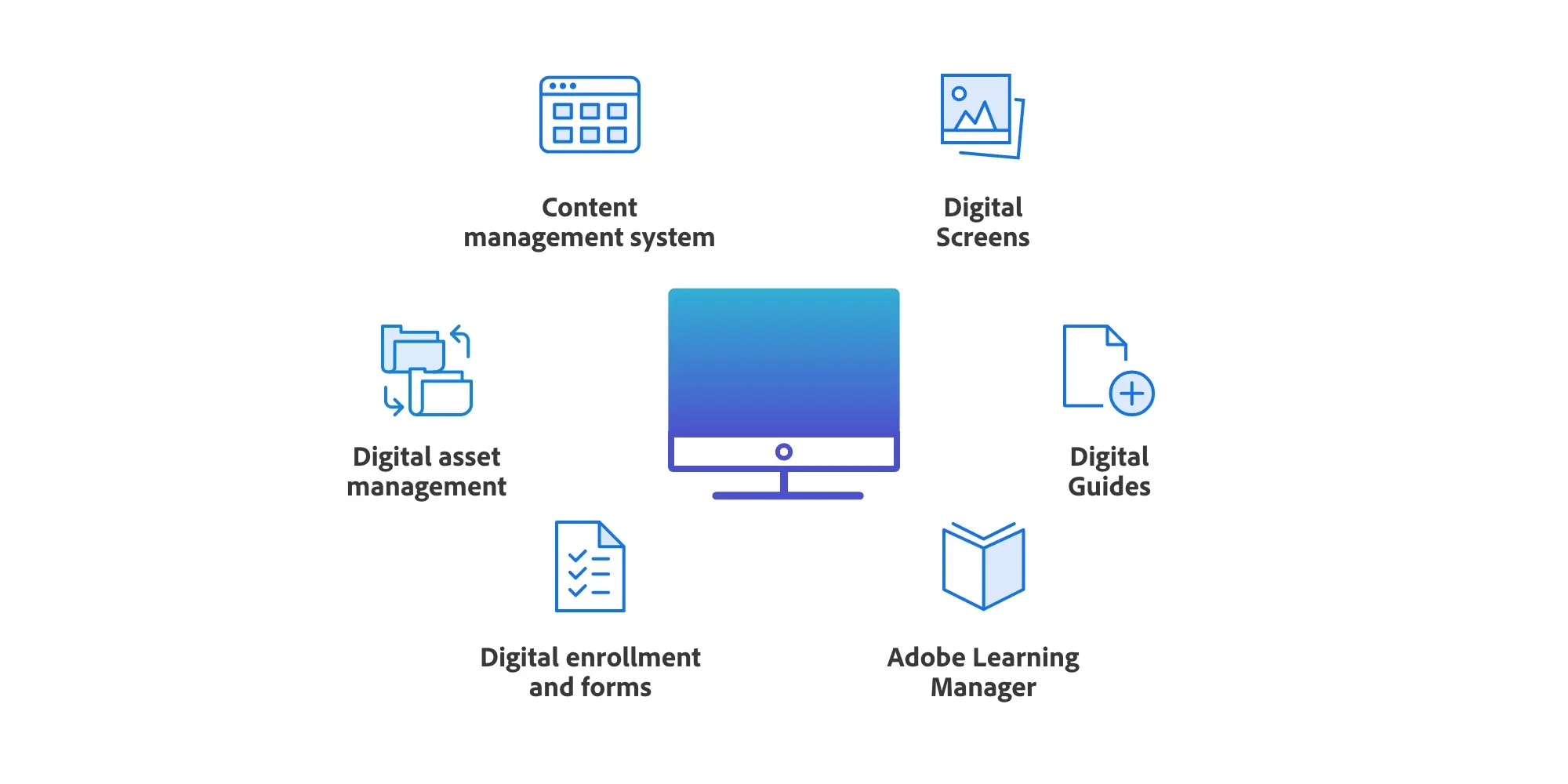
    Built to cater to the needs of business owners, developers and marketers alike, Adobe Experience Manager (AEM) successfully combines web content management, digital asset management and digital experience management functionalities into a single, unified platform.

This way, AEM provides enterprise-level organizations with the opportunity to create and deliver dynamic digital experiences across multiple channels, including websites, mobile applications, and connected devices. 

According to a 2021 Forrester report more than 128,000 websites rely on the agile setup of Adobe Experience Manager to manage their content and create simplified and streamlined digital experiences, making it a popular choice among business organizations.

But’s let’s break down those two sides of Experience Manager, CMS and DAM, to get the full picture.


Adobe Experience Manager as a powerful content management system

Adobe Experience Manager Sites is a marketer- and developer-friendly content management system. It allows organizations to quickly and seamlessly build websites, digital forms or mobile applications, using templates and ready-to-use components. Developers can also make customizations to handle specific business logic, build components, custom workflow models, etc.


Digital asset management - Experience Manager Assets

Adobe Experience Manager Assets is a digital asset management (DAM) system and it helps organizations store, organize, and access their digital media, such as images, videos, and 3D models. This gives businesses the opportunity to leverage automation and tools, so to rapidly source, adapt, and deliver  assets across multiple audiences and channels.

How Java and AEM are connected?

Behind the scenes of AEM’s functionalities stays open-source Java, which is known for its versatility and scalability. The core framework of AEM relies on Apache Sling and OSGi, both of which are Java-based. These frameworks enable AEM to handle web applications and services in a modular and scalable way. What’s more, AEM uses Java Content Repository (JCR) to store content and developers often write custom Java classes in AEM to implement business logic, using sling models, servlets or services.

The role of our team of AEM Developers at KBC Global Services with Java skills is quite complex, indeed. They not only build and customize the platform, but they enhance digital experiences through creating custom components, templates and workflows for web and mobile applications. What’s more, the team is focused on integrating AEM with backend services, built with Spring Boot and microservices.

As you see, an AEM developer needs to have a strong grasp of  a variety of web technologies, like Apache Sling, JCR (Java Content Repository), and OSGi modular architecture . Additionally, AEM developers must be proficient in crafting responsive and user-friendly web interfaces, leveraging CSS frameworks like Bootstrap and JavaScript libraries like jQuery to enhance user experiences.

Why Java developers consider building AEM expertise?

Working in AEM is a highly sought-after skill in enterprise web development, and by adding this expertise to their skill set, Java developers get the chance to:

✔ Expand their skill set beyond traditional backend and frontend development

✔ Work on large-scale, high-impact projects for global brands

✔ Gain expertise in modular, component-driven architecture

✔ Stay ahead in the industry with Adobe’s cutting-edge technology

All this makes gaining AEM expertise a good career move for a Java developer.

First, it’s still Java. You won’t be throwing away the years you've invested in mastering it. AEM is built on top of Java technologies like OSGi, Sling, and JCR, so everything you're already good at - backend logic, modular architecture, performance optimization - will continue to be relevant. You're not starting from scratch; you're building on what you already know.

It’s not just backend - there’s architecture, content modeling, workflows, integrations, even a bit of frontend with HTML and JavaScript. It makes you a more complete developer, and it’s nice to actually see the result of your work on screen, powering big websites that thousands or even millions of users interact with. Plus, at KBC Global Services you get to work with top-tier clients and long-term digital transformation projects. It’s not just bug fixing and feature tickets - it’s being involved in how an a leading financial institution builds their digital experiences.

If you’re someone who is solid in Java and looking to grow into something more specialized, AEM is a great move. It’s future proof, challenging, and gives you real leverage in the job market, so don’t hesitate to check out our open position.